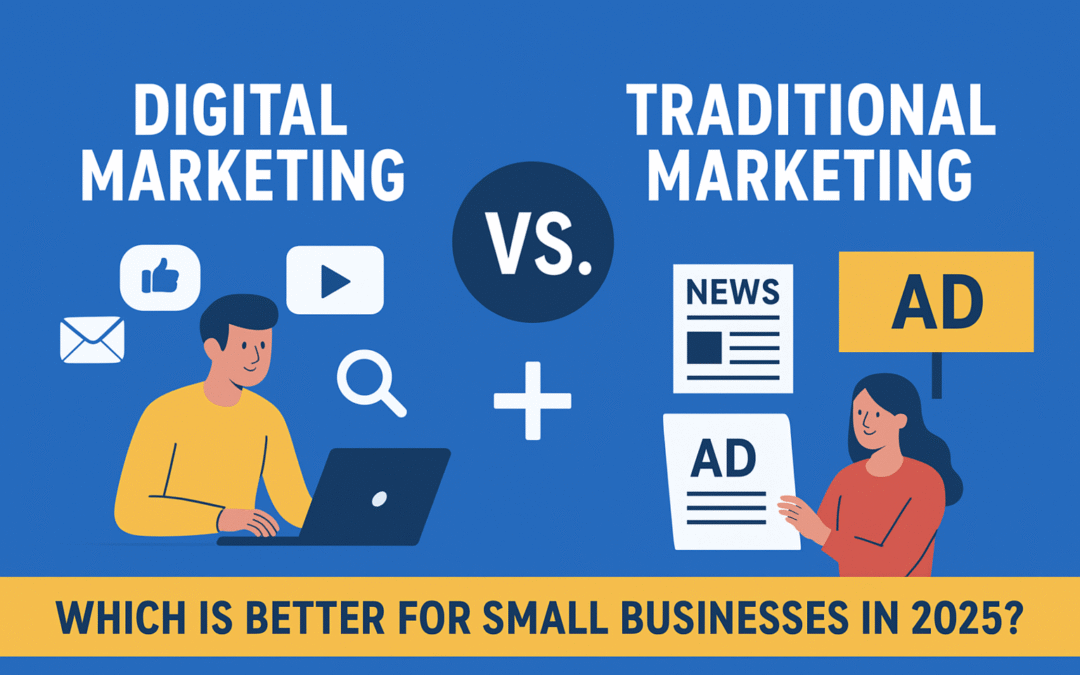
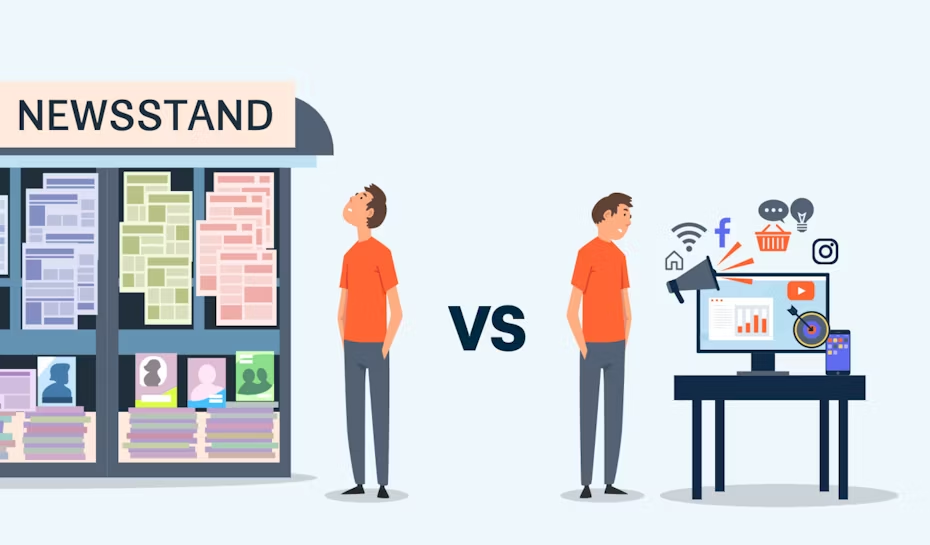
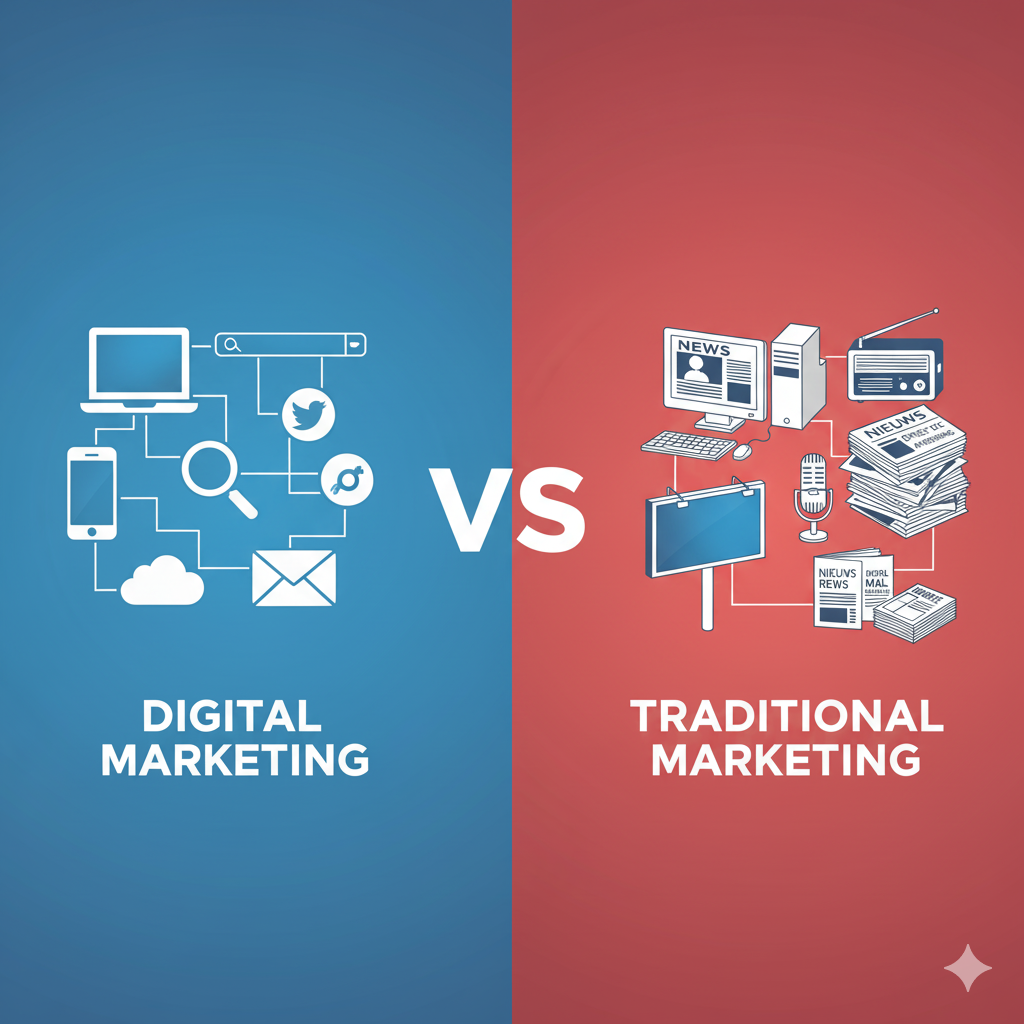
When it comes to digital marketing vs traditional marketing, the main difference is how you reach your customers. Traditional marketing relies on offline channels such as newspapers, magazines, TV ads, radio, billboards, flyers, and in-person events. These methods are great for building local brand awareness and establishing credibility, but they are often costly, harder to track, and less targeted.
On the other hand, digital marketing vs traditional marketing shows the power of online channels—social media, search engines, websites, email marketing, and paid online ads. With digital marketing, small businesses can reach the right audience at the right time, measure performance in real-time, and adjust strategies instantly. The advantages of digital marketing include lower costs, precise targeting, and better engagement, while traditional marketing benefits like trust and local visibility still play a role.
In 2025, for small businesses aiming to grow efficiently, digital marketing vs traditional marketing leans heavily toward digital methods. Digital campaigns offer measurable ROI, interactive communication, and scalability that offline methods simply cannot match. However, integrating both approaches—using hybrid strategies—can combine the benefits of traditional marketing with the efficiency of online promotion, creating a complete marketing solution that maximizes visibility, engagement, and conversions.
Contents
- 1 Introduction
- 2 What Is Traditional Marketing?
- 3 What Is Digital Marketing?
- 4 Digital Marketing vs Traditional Marketing — Key Differences
- 5 Why Digital Marketing Wins for Small Businesses in 2025
- 6 Can Traditional Marketing Still Help Small Businesses in 2025?
- 7 The Role of Hybrid Marketing
- 8 Real-Life Examples — Digital Marketing vs Traditional Marketing in Action
- 9 Future of Marketing in 2025 and Beyond
- 10 Combining Digital Marketing and Traditional Marketing — The Smart Approach
- 11 How Small Businesses Can Start Digital Marketing in 2025
- 12 Key Takeaways
- 13 Frequently Asked Questions
- 14 Conclusion
Introduction
If you own a small business, you’ve probably asked yourself this question countless times: “Should I invest in digital marketing or stick to traditional marketing methods?” In other words, how do you decide between digital marketing vs traditional marketing to get the best results for your limited budget? It’s a valid and important question, especially in 2025, where consumer behavior is rapidly shifting.
Marketing has changed more in the last decade than in the previous fifty years. In the past, flyers, newspaper ads, radio jingles, and hoardings were the go-to methods for small businesses. Traditional marketing helped local shops, boutiques, and restaurants reach audiences in their community. Its benefits included physical presence, credibility, and broad visibility. But today, the landscape is very different. Social media platforms like Facebook and Instagram, Google search ads, YouTube videos, and even emerging short-form content dominate attention.
This brings us to the heart of the matter: digital marketing vs traditional marketing. Which one truly delivers better results in 2025? While traditional marketing still has its place—especially for building trust, local awareness, and event promotions—digital marketing offers measurable results, real-time analytics, precise targeting, and cost-efficient strategies that small businesses can leverage to grow faster and smarter.
Whether you run a bakery, boutique, textile business, or a local service, understanding the advantages of digital marketing vs traditional marketing is crucial. This guide will break down the key differences, benefits, and ROI of both methods, show you practical small business marketing strategies, and help you decide which approach—or combination of approaches—can maximize growth, engagement, and revenue. By the end of this guide, you’ll clearly see why digital marketing vs traditional marketing isn’t just a debate—it’s a strategic decision that can make or break your small business success in 2025.
What Is Traditional Marketing?
Traditional marketing refers to any promotion that happens offline—before the internet became the main source of information.
It includes:
- Newspaper and magazine ads
- TV and radio commercials
- Billboards and posters
- Flyers, brochures, and direct mail
- Event sponsorships
These methods are still common today, especially in local markets. They create brand awareness and trust, especially among audiences who prefer physical interactions.
Examples of Traditional Marketing
- Print Ads: A garment store in Tirupur placing a half-page ad in The Hindu during the festival season.
- Radio Ads: A café running a catchy jingle on FM stations.
- Outdoor Ads: Billboards promoting a coaching center at busy junctions.
- Event Marketing: Sponsoring a local marathon or community function.
Benefits of Traditional Marketing
- Local Reach: Works great for targeting people in specific areas.
- Tangible Impact: Physical materials like flyers can be kept or shown to others.
- High Trust Factor: Many still perceive traditional ads as more credible.
- Mass Exposure: TV or newspaper ads can reach large audiences quickly.
Drawbacks of Traditional Marketing
- Expensive: Running a TV or print campaign costs lakhs.
- Difficult to Track: You can’t measure how many people actually saw your ad.
- Limited Interaction: It’s one-way communication—no direct engagement.
- Less Flexible: Once printed or aired, changes are costly or impossible.
What Is Digital Marketing?
Digital marketing means using online platforms to promote your business.
It covers:
- Search engine optimization (SEO)
- Social media marketing (Facebook, Instagram, LinkedIn, etc.)
- Email marketing
- Pay-per-click (PPC) ads
- Content marketing (blogs, videos, etc.)
- Influencer and affiliate marketing
Examples of Digital Marketing
- A clothing boutique running an Instagram reel showcasing new arrivals.
- A café posting Google Ads targeting “coffee shops near me.”
- A coaching institute ranking on Google through SEO blogs.
- A digital marketer sending email offers to repeat customers.
Benefits of Digital Marketing
- Cost-Effective: You can start with a few hundred rupees on social media ads.
- Measurable: Track clicks, views, and conversions in real time.
- Highly Targeted: Show your ad only to the right age, location, or interest group.
- Interactive: Customers can comment, share, or chat instantly.
- Scalable: Works for both local and global audiences.
Digital marketing offers measurable results, precise targeting, and cost-efficiency compared to traditional methods. Learn more about Digital Marketing’s Role in The Growth of Small Businesses
Drawbacks of Digital Marketing
- Requires Skill: You need to understand tools and algorithms.
- High Competition: Everyone is online, so you must stand out.
- Needs Consistency: Results take time; short campaigns rarely work.
- Ad Fatigue: Users can get tired of repetitive ads.
Digital Marketing vs Traditional Marketing — Key Differences
| Aspect | Traditional Marketing | Digital Marketing |
| Medium | Offline (TV, print, radio, billboards) | Online (social media, websites, email, search engines) |
| Cost | High upfront cost | Flexible and affordable |
| Targeting | Broad and general | Specific and measurable |
| Speed | Slower to launch | Instant to publish and adjust |
| Tracking | Difficult to measure | Easy with analytics tools |
| Engagement | One-way communication | Two-way, interactive |
| Reach | Local or regional | Global and local |
| Flexibility | Hard to change mid-campaign | Can edit anytime |
| ROI Measurement | Approximate | Precise and data-driven |
| Longevity | Physical presence lasts longer | Online content can trend or fade quickly |
Why Digital Marketing Wins for Small Businesses in 2025
In 2025, customer behaviour revolves around search, social, and smartphones. People discover local shops through Google Maps, Instagram reels, and YouTube reviews—not TV commercials.
Here’s why digital marketing outperforms traditional marketing for small business owners:
Lower Cost, Higher Returns
A 2024 survey by Statista shows that digital ads cost 60% less on average than print or TV campaigns.
Even a small shop can run Facebook or Instagram ads for ₹500–₹1000 a day and reach thousands.
Meanwhile, a single newspaper ad might cost ₹20,000 for one day’s visibility.
Digital marketing gives you better ROI (Return on Investment) because you only pay for real engagement—clicks, visits, or sales.
Precision Targeting
Unlike a billboard that everyone sees, digital platforms let you define exactly who should see your ad—by location, age, gender, and interests.
For example, a Tirupur-based T-shirt brand can target “college students aged 18–25 interested in fashion and online shopping.”
This saves money and boosts conversions.
Real-Time Performance Tracking
Digital campaigns provide live analytics.
You can instantly know:
- How many people viewed your ad
- Which posts perform best
- What time your customers are most active
Traditional marketing offers none of these insights.
Builds Stronger Customer Relationships
Social media marketing allows two-way interaction.
Customers can ask questions, share feedback, or tag your brand.
This creates trust and a sense of community—something traditional marketing rarely achieves.
Adapts Easily to Trends
Digital marketing evolves with technology. In 2025, trends like AI-based ad optimization, short-form video, and voice search SEO are reshaping how customers engage.
Small businesses that stay active online stay relevant.
AI-powered campaigns can automate content creation and ad optimization (Google Gemini)
Can Traditional Marketing Still Help Small Businesses in 2025?
While digital marketing vs traditional marketing clearly shows the dominance of online methods, that doesn’t mean traditional marketing is dead.
In fact, it can still play a powerful role—especially when combined strategically with digital tools.
When Traditional Marketing Still Works
- Local Awareness Campaigns:
For small businesses targeting a nearby audience—like salons, grocery stores, or cafes—posters, banners, and local newspaper ads still work well. - Older Demographic Targeting:
People aged 50+ may not be as active online. Traditional channels like radio or print help reach this audience. - Brand Trust & Credibility:
A full-page ad in a reputed newspaper or magazine can create prestige. Even digital-first companies use offline ads occasionally to strengthen brand image. - Event or Launch Promotions:
Flyers, sponsorships, and billboards can create buzz for store openings or local events.
The Role of Hybrid Marketing
In 2025, the most successful small businesses no longer rely solely on one approach—they embrace hybrid marketing, a smart blend of digital marketing vs traditional marketing. This strategy, also known as integrated marketing, combines the strengths of both online and offline methods to maximize reach, engagement, and return on investment.
Digital marketing vs traditional marketing each has its unique advantages. Digital marketing provides small businesses with precise targeting, measurable results, cost efficiency, and interactive engagement through social media, email, search engine campaigns, and website optimization. Traditional marketing, on the other hand, builds local awareness, credibility, and trust through physical touchpoints like print ads, radio, flyers, billboards, and community events. By merging these approaches, small businesses can leverage the benefits of digital marketing while maintaining the tangible, trusted presence offered by traditional methods.
Hybrid marketing allows brands to create a seamless customer journey, connecting offline interactions with online engagement. For example, a flyer distributed in a local market can include a QR code that directs customers to an online store or social media page. Similarly, digital campaigns like Instagram ads or Google search promotions can drive traffic to physical stores or events, illustrating the synergy between digital marketing vs traditional marketing.
This integrated approach also enables small businesses to measure and optimize ROI more effectively. While traditional marketing alone often lacks precise tracking, combining it with digital tools allows businesses to monitor conversions, engagement, and audience behavior. As a result, hybrid marketing strategies empower small business owners to make data-driven decisions, refine campaigns, and achieve sustainable growth.
In short, the role of hybrid marketing in 2025 is pivotal. Small businesses that adopt digital marketing vs traditional marketing in tandem can enjoy the best of both worlds—enhanced visibility, targeted engagement, increased credibility, and higher returns on marketing investment. Hybrid marketing isn’t just a trend; it’s a strategic necessity for growth-minded small businesses looking to thrive in today’s competitive market.
Example:
A Tirupur garment brand could:
- Run newspaper ads announcing a festive sale (traditional).
- Add a QR code that links to their Instagram page or online shop (digital).
This bridge between offline and online creates a full 360° experience for customers.
Real-Life Examples — Digital Marketing vs Traditional Marketing in Action
Understanding digital marketing vs traditional marketing is easier when we see how real brands apply these strategies effectively. Let’s explore examples from successful companies and uncover lessons that small businesses can implement.
Example 1 – Amul (Traditional + Digital Success)
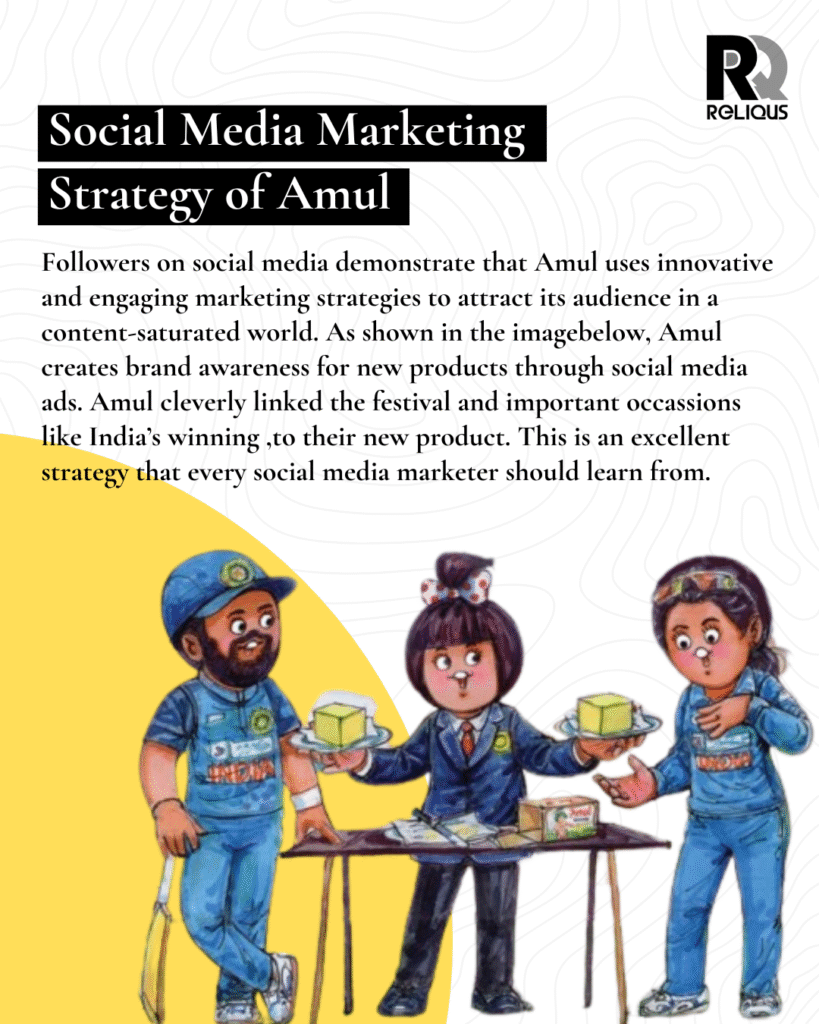
Amul, a household name in India, is a perfect example of blending digital marketing vs traditional marketing for long-term success. The brand began decades ago with iconic billboard ads, print campaigns, and traditional promotions that built strong local recognition and trust. These offline strategies established Amul’s credibility and emotional connection with audiences.
Today, Amul dominates the digital space as well, leveraging social media marketing with humorous, trending posts that go viral, engage audiences, and drive conversations online. By combining traditional storytelling with digital engagement, Amul demonstrates how digital marketing vs traditional marketing integration can amplify reach, enhance brand recall, and strengthen customer loyalty. Small businesses can learn from this by maintaining consistent branding, messaging, and tone across both offline and online channels while monitoring digital campaigns to measure ROI effectively.
Example 2 – Zomato (Digital-First Powerhouse)
Zomato, in contrast, emphasizes digital marketing over traditional marketing, showcasing the power of online-first strategies. The brand rarely uses traditional media like print or billboards. Instead, it relies on social media memes, push notifications, personalized offers, and digital campaigns to engage users directly. This approach illustrates the advantages of digital marketing vs traditional marketing for precise audience targeting, real-time performance tracking, and scalable campaigns.
By focusing on digital channels, Zomato maintains constant communication with its customers, collects actionable data, and adapts campaigns dynamically—highlighting how digital marketing vs traditional marketing can be leveraged strategically based on business goals. Small businesses can adopt similar tactics by prioritizing digital campaigns for tracking results, while selectively integrating traditional methods where credibility, local awareness, or offline visibility is needed.
Key Takeaways for Small Businesses
- Successful brands use digital marketing vs traditional marketing together or selectively depending on objectives.
- Hybrid marketing strategies combine offline credibility with online engagement for maximum impact.
- Tracking metrics from digital campaigns allows small businesses to measure marketing ROI and optimize future strategies.
- Consistent brand storytelling across all channels reinforces recognition, trust, and loyalty.
These real-world examples highlight that whether you lean more on digital, traditional, or a hybrid approach, understanding digital marketing vs traditional marketing and applying it strategically is essential for small business growth in 2025.
Future of Marketing in 2025 and Beyond
In 2025, the marketing landscape is no longer about simply choosing between digital marketing vs traditional marketing—it’s about integrating both worlds seamlessly to maximize impact. Small businesses that rely solely on traditional marketing risk falling behind, while those that embrace digital marketing advantages can reach wider audiences, track performance, and adapt strategies in real time.
AI-Powered Campaigns
Artificial Intelligence (AI) has revolutionized marketing, making the digital marketing vs traditional marketing comparison even more critical. Tools like ChatGPT, Google’s Gemini, and Meta’s Advantage+ Ads allow small businesses to automate targeting, optimize ad spend, and create personalized content at scale. With AI, small businesses can now compete with big brands by predicting customer behavior, tailoring offers, and improving marketing ROI—capabilities that traditional marketing methods simply cannot match. By combining AI-driven digital campaigns with select offline promotions, small businesses can implement powerful hybrid marketing strategies that reach both local and global audiences.
Voice Search Optimization
With the rise of smart speakers and voice assistants, consumers search for services differently in 2025. Queries like:
“Best tailor shop near me” or “Affordable catering service nearby”
require small businesses to optimize their websites and Google Business Profiles for voice search SEO. This integration of digital marketing vs traditional marketing ensures that businesses capture both online traffic and local footfall, bridging the gap between offline visibility and online discovery.
Short-Form Video Dominance
Short-form video content dominates attention spans today. Platforms like Instagram Reels, YouTube Shorts, and TikTok (where available) allow businesses to create engaging, bite-sized videos that communicate their brand story instantly. For small businesses, leveraging these digital marketing advantages over traditional ads—flyers, posters, or radio spots—can increase brand recall, social sharing, and direct conversions.
Content That Educates and Entertains
Modern consumers prefer brands that teach rather than push. Educational blogs, “how-to” guides, explainer videos, and comparison content like this article are far more effective than static traditional marketing campaigns. By integrating content marketing into digital marketing vs traditional marketing strategies, small businesses can build trust, attract loyal audiences, and improve long-term engagement while still maintaining some offline touchpoints for credibility.
Data-Driven Decision Making
One of the biggest advantages of digital marketing vs traditional marketing in 2025 is the ability to measure every click, view, and conversion. Digital analytics tools provide small businesses with insights into what works, what doesn’t, and where to allocate budget. This data-driven approach allows for continuous improvement and optimization—something traditional marketing campaigns, like billboards or radio ads, cannot offer. By combining online and offline marketing strategies, small businesses can maximize ROI, refine messaging, and implement smarter small business growth strategies that keep them competitive in a rapidly evolving market.
Combining Digital Marketing and Traditional Marketing — The Smart Approach
In 2025, the most effective marketing strategy for small businesses isn’t choosing between digital marketing vs traditional marketing—it’s combining both to create a seamless, multi-channel presence. Businesses that integrate online and offline marketing efforts can leverage the advantages of digital marketing while still benefiting from the credibility, local reach, and trust that traditional marketing provides. This hybrid approach maximizes marketing ROI, strengthens brand visibility, and drives sustainable growth.
Use Offline Ads to Drive Online Traffic
Traditional marketing methods like posters, flyers, and billboards can now be integrated with digital campaigns. Adding QR codes to physical ads or brochures directs customers to your website, Google Maps listing, or social media pages. This creates a direct connection between offline visibility and online engagement, showing how digital marketing vs traditional marketing can work together to boost customer acquisition and small business growth.
Promote Online Campaigns Offline
Just as offline ads can drive online traffic, online campaigns can also enhance traditional marketing efforts. Include your Instagram handle, WhatsApp contact, or website link on printed flyers, packaging, and banners. This not only increases brand recall but also encourages customers to engage with your business digitally, demonstrating the synergy between digital marketing and traditional marketing channels.
Collect Customer Data Offline for Digital Remarketing
When customers visit your store, collect email addresses, phone numbers, or loyalty program details (with permission). You can then use this data to run targeted digital campaigns—like email newsletters, WhatsApp offers, or social media ads—effectively blending offline marketing benefits with digital marketing precision. This strategy allows you to track marketing ROI more accurately and personalize campaigns for higher engagement.
Tell One Brand Story Across Channels
Consistency is key when merging digital marketing vs traditional marketing. Use the same logo, tagline, color scheme, and tone of voice across all channels. Whether it’s a Facebook ad, an Instagram post, or a newspaper ad, your audience should immediately recognize your brand. This unified approach reinforces credibility, builds trust, and strengthens long-term customer relationships.
Measure & Adjust Continuously
One of the biggest advantages of combining digital marketing vs traditional marketing is the ability to track and optimize results. Use digital metrics like clicks, website visits, online inquiries, and social media engagement to indirectly measure the effectiveness of traditional campaigns. For example, if a flyer with a QR code generates website traffic or sales, you can quantify the impact of offline marketing on your digital performance. Continuously analyzing this data ensures your hybrid marketing strategies remain effective and cost-efficient.
How Small Businesses Can Start Digital Marketing in 2025
You don’t need a huge budget or agency to get started. Here’s a step-by-step beginner’s plan:
Step 1 – Create a Google Business Profile
List your business on Google Maps. Add photos, working hours, and contact details.
This helps you appear in “near me” searches—a must for local visibility.
Step 2 – Build a Simple Website
A one-page site with your services, testimonials, and contact form is enough.
Make sure it’s mobile-friendly and optimized with keywords like “digital marketing vs traditional marketing for small businesses” if you blog about your journey.
Step 3 – Use Social Media Smartly
Pick one or two platforms your customers use most—Instagram, Facebook, or LinkedIn.
Post regularly with clear visuals and authentic captions.
Use hashtags like #digitalmarketing, #smallbusinessgrowth, #marketingtips2025.
Step 4 – Run Targeted Ads
Start with small daily budgets.
Test different ad creatives and track which ones convert best.
The goal isn’t just likes—it’s calls, visits, and sales.
Step 5 – Collect Feedback and Reviews
Encourage happy customers to leave Google Reviews.
Positive feedback improves local SEO and builds trust faster than any billboard could.
Key Takeaways
| Criteria | Traditional Marketing | Digital Marketing | Best for Small Businesses |
| Cost | High | Low to moderate | ✅ Digital |
| Reach | Local/Regional | Global + Local | ✅ Digital |
| Targeting | Broad | Highly specific | ✅ Digital |
| Tracking | Limited | Real-time analytics | ✅ Digital |
| Customer Engagement | One-way | Interactive | ✅ Digital |
| Flexibility | Static | Editable anytime | ✅ Digital |
| Trust | High with older audiences | Builds through reviews | ✅ Both combined |
Verdict:
For small businesses in 2025, the debate of digital marketing vs traditional marketing is no longer theoretical—it directly impacts growth, revenue, and customer engagement. In almost every measurable aspect, digital marketing outperforms traditional marketing. When it comes to cost-efficiency, digital campaigns allow small businesses to reach thousands of potential customers for a fraction of the price of a newspaper ad, radio spot, or billboard. Regarding reach, digital marketing connects your brand to both local and global audiences, while traditional marketing is largely limited to local or regional visibility.
Engagement is another major differentiator: digital marketing vs traditional marketing provides interactive opportunities through social media comments, email responses, website chats, and online reviews, creating stronger connections with customers than one-way offline promotions.
That said, traditional marketing still holds value. Physical ads, flyers, posters, and community events continue to build brand credibility, trust, and local awareness. The advantages of digital marketing—measurable ROI, precise targeting, scalability, and data-driven decision-making—give small businesses a competitive edge, but combining these with traditional marketing benefits can create a powerful hybrid approach.
In 2025, the future belongs to small business owners who fully embrace digital marketing vs traditional marketing, leveraging online tools while strategically maintaining offline presence. By doing so, they maximize visibility, optimize marketing ROI, and implement small business growth strategies that keep them ahead in a rapidly changing marketplace.
Frequently Asked Questions
Q1: What is the main difference between digital marketing and traditional marketing?
Traditional marketing uses offline channels like print, TV, and billboards.
Digital marketing uses online platforms like social media, websites, and search engines.
Q2: Why is digital marketing better for small businesses?
Because it’s cheaper, measurable, and lets you target the right customers directly. You can start small, track performance, and scale when you see results.
Q3: Is traditional marketing still effective in 2025?
Yes, for local reach or specific demographics. Combining both (hybrid marketing) often works best.
Q4: Which type of marketing has a higher ROI?
Digital marketing typically offers a higher return because you can monitor metrics and adjust campaigns instantly.
Q5: Can I do digital marketing myself?
Absolutely. Many tools like Canva, Google Ads, and Meta Business Suite make it easy for small business owners to create and manage campaigns without expert help.
Q6: What is the most cost-effective form of marketing for startups?
Organic social media marketing and SEO blogs offer long-term visibility without major spending.
Q7: What is the difference between digital marketing and traditional marketing?
Answer: Digital marketing uses online channels like social media, search engines, email, and websites to reach customers, while traditional marketing relies on offline channels such as newspapers, radio, TV ads, flyers, and billboards. Comparing digital marketing vs traditional marketing, digital offers precise targeting, measurable ROI, and interactive engagement, whereas traditional marketing builds credibility and local visibility.
Q8: Why is digital marketing better than traditional marketing for small businesses?
Answer: For small businesses, digital marketing vs traditional marketing often favors digital because it’s more cost-effective, measurable, and scalable. Online campaigns allow precise audience targeting, instant feedback, and flexible budgets. While traditional marketing benefits like trust and local exposure remain valuable, digital strategies provide higher marketing ROI and faster customer acquisition.
Q9: Can traditional marketing still be effective in 2025?
Answer: Yes. Traditional marketing continues to deliver value, especially for local brand awareness, community engagement, and building trust. However, the modern small business strategy should integrate both digital and offline methods. Combining them through hybrid marketing strategies maximizes results, blending the advantages of digital marketing vs traditional marketing.
Q10: How can small businesses combine digital and traditional marketing?
Answer: A hybrid approach bridges offline and online marketing. Examples include using QR codes on flyers to drive traffic to a website, promoting social media handles on packaging, or collecting offline customer data for digital remarketing. Integrating digital marketing vs traditional marketing ensures consistent branding, better engagement, and optimized marketing ROI.
Q11: What are the advantages of digital marketing over traditional marketing?
Answer: The key advantages of digital marketing include measurable results, cost-efficiency, precise audience targeting, real-time analytics, and scalability. In contrast, traditional marketing benefits from physical presence, local visibility, and brand trust. Understanding the strengths of digital marketing vs traditional marketing helps small businesses implement strategies that maximize growth.
Q12: Is hybrid marketing the future for small businesses?
Answer: Absolutely. In 2025, hybrid or integrated marketing—combining digital and traditional marketing—allows small businesses to reach broader audiences, track results accurately, and maintain offline credibility. The synergy between digital marketing vs traditional marketing ensures optimal engagement, visibility, and sustainable growth.
Conclusion
In the ongoing debate of digital marketing vs traditional marketing, one thing is crystal clear: small businesses thrive online in 2025. Digital marketing vs traditional marketing shows that digital channels offer unmatched advantages—precise targeting, measurable results, affordability, and flexibility—capabilities that traditional media alone cannot match. By using social media, email campaigns, Google search ads, and online video, small businesses can harness the full power of digital marketing vs traditional marketing to reach the right audience, track marketing ROI, and scale effectively.
However, traditional marketing still plays a vital role in small business strategies. Flyers, print ads, radio campaigns, billboards, and local events provide credibility, trust, and tangible touchpoints that digital marketing cannot fully replicate. The real power lies in digital marketing vs traditional marketing integration—combining offline trust with online reach to create a cohesive, multi-channel presence.
A successful small business in 2025 leverages digital marketing vs traditional marketing together. Use QR codes on printed materials to drive online engagement, promote social media handles offline, and collect customer information in-store for digital remarketing. This hybrid approach ensures that your brand is visible everywhere your customers are—on the street, in print, online, and on mobile devices.
Ultimately, the winning formula is clear: small businesses that embrace digital marketing vs traditional marketing integration can maximize visibility, optimize marketing ROI, strengthen customer loyalty, and achieve sustainable growth. By blending the advantages of digital marketing with the benefits of traditional marketing, businesses can create a powerful, future-ready marketing strategy that drives results in 2025 and beyond.