
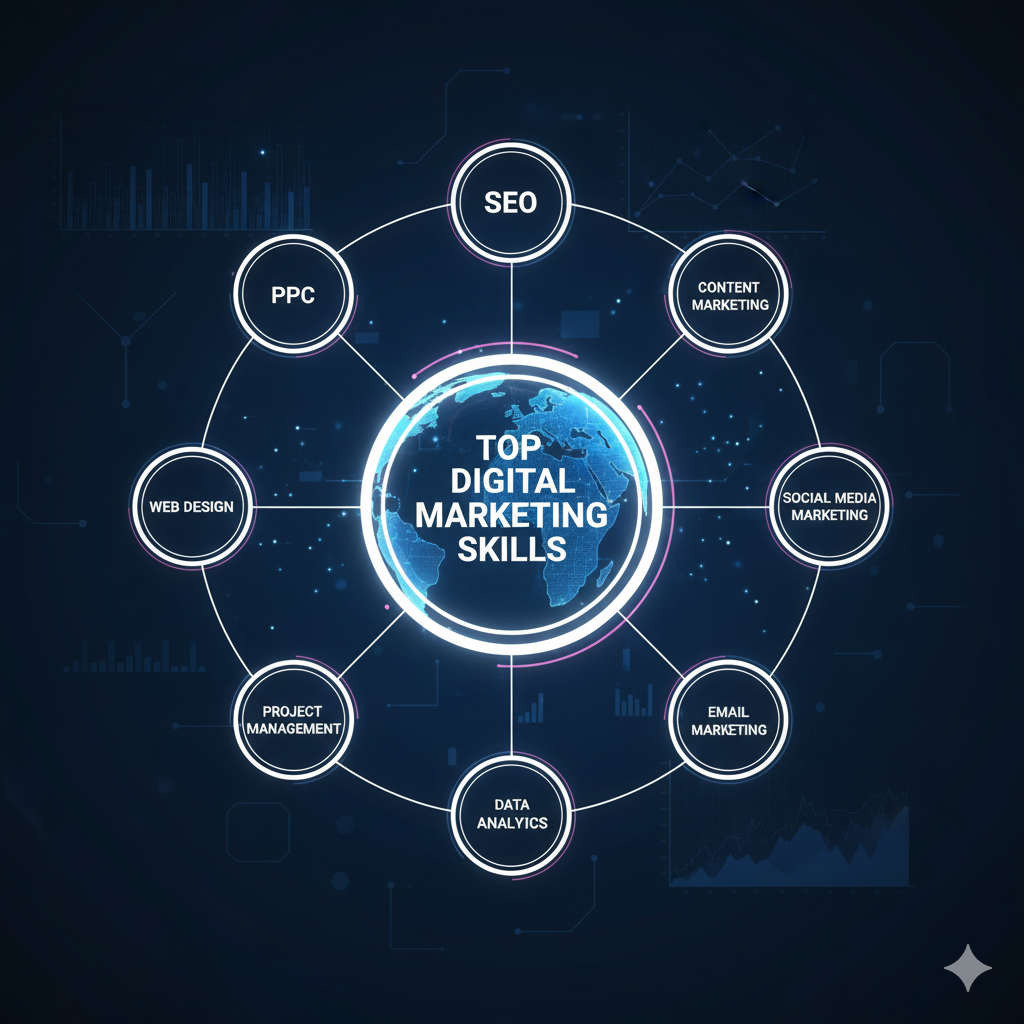
The most essential skills for a successful Digital Marketing Freelancer are a blend of creative strategy and technical execution, including SEO (Search Engine Optimization), Content Marketing, Social Media Marketing, PPC (Pay-Per-Click) Advertising, Email Marketing, Data Analytics, Web Design Basics, Communication, Project Management, and Client Relationship Management. Mastering these skills allows a freelancer to offer comprehensive services, attract high-paying clients, and reliably drive business growth, making them a top-tier digital marketing professional.
Contents
- 1 Introduction: Why Being a Digital Marketing Freelancer is the Future
- 2 Top 10 Skills Every Digital Marketing Freelancer Must Master
- 2.1 1. SEO (Search Engine Optimization): The ‘Get Found’ Skill
- 2.2 2. Content Marketing: Creating Magnetic Stories
- 2.3 3. Social Media Marketing (SMM): Being Where the People Are
- 2.4 4. PPC (Pay-Per-Click) Advertising: Instant Traffic on Demand
- 2.5 5. Email Marketing: The Money in the List
- 2.6 6. Data Analytics: Understanding the Scorecard
- 2.7 7. Web Design & UX Basics: Making the Website Friendly
- 2.8 8. Client Relationship Management: Being a True Partner
- 2.9 9. Project Management: Keeping All the Balls in the Air
- 2.10 10. Copywriting & Persuasion: The Art of Selling with Words
- 3 Final Thoughts on Your Freelance Journey
- 4 Frequently Asked Questions
Introduction: Why Being a Digital Marketing Freelancer is the Future
Do you dream of working from anywhere, choosing your own clients, and earning what you truly deserve? Then the future is calling you — and it’s the life of a Digital Marketing Freelancer.
In today’s fast-paced digital world, businesses of all sizes are shifting online. Every brand — whether a small startup or an established company — needs a strong digital presence to grow and stay competitive. However, not every business can afford a full-time marketing team. That’s exactly where a Digital Marketing Freelancer steps in — as a flexible, skilled, and result-driven professional who helps businesses boost visibility, attract customers, and increase revenue through smart digital marketing strategies.
Being a Digital Marketing Freelancer means freedom. You’re not tied to a 9-to-5 office routine. You can work remotely from your laptop — from home, a café, or even while traveling. You get to choose the kind of projects that excite you — whether it’s managing social media campaigns, running Google Ads, improving SEO rankings, or building content strategies. This flexibility allows you to balance work and lifestyle while constantly learning new trends in the digital world.
More and more professionals are leaving traditional jobs to become freelancers in digital marketing because the demand for digital expertise is skyrocketing. Businesses are willing to invest in experts who can generate real results — more website traffic, higher engagement, and better sales conversions. As a freelance digital marketer, you’re not just offering services; you’re helping brands tell their story, connect with audiences, and grow online.
However, success as a Digital Marketing Freelancer doesn’t come from mastering just one skill. The digital marketing landscape is broad — covering everything from SEO and social media to email campaigns and analytics. To truly stand out, you need a powerful combination of technical know-how, creativity, and strategic thinking.
This article dives deep into the Top 10 Skills Every Digital Marketing Freelancer Needs to Succeed — explained in simple, actionable terms. Whether you’re just starting your freelancing journey or looking to upgrade your existing skills, this guide will help you build a strong foundation to become a sought-after Digital Marketing Freelancer in today’s competitive online marketplace.
Top 10 Skills Every Digital Marketing Freelancer Must Master
1. SEO (Search Engine Optimization): The ‘Get Found’ Skill
Think of Google as a massive online library. SEO is the art and science of ensuring your client’s website is placed right at the top of the search results — like putting their “book” on the top shelf where everyone can see it. As a Digital Marketing Freelancer, SEO is your superpower to make brands visible online.
What it means:
- Keywords: Learning exactly what people type into Google and how to use those words naturally in content.
- On-Page SEO: Optimizing titles, images, meta descriptions, and URLs so search engines can easily understand the site.
- Of-Page SEO: Getting trusted websites to link back to your client’s site — a powerful signal of credibility.
Why it’s essential: Without strong SEO, even a beautiful website remains invisible. Every successful Digital Marketing Freelancer needs to master SEO to help clients grow traffic, generate leads, and rank higher in search engines.
You can also learn latest SEO trends from the Semrush SEO blog
2. Content Marketing: Creating Magnetic Stories
In the digital world, content is currency. As a Digital Marketing Freelancer, your ability to create valuable, engaging, and SEO-friendly content defines your success. Content marketing is about crafting useful blogs, social media posts, videos, and guides that attract and retain customers.
What it means:
- Blogging/Article Writing: Providing informative answers to your audience’s most-searched questions.
- Video Scripts: Planning and scripting engaging videos that capture attention quickly.
- Goal-Focused Content: Every post or article should guide readers toward becoming loyal customers.
Why it’s essential: Quality content fuels SEO, social media, and email campaigns. It builds trust, authority, and a loyal audience for your clients. A skilled Digital Marketing Freelancer knows that great content converts browsers into buyers.
You can also learn advanced strategies from the Backlinko’s Content Marketing Blog
3. Social Media Marketing (SMM): Being Where the People Are
Social media is where conversations happen — and as a Digital Marketing Freelancer, it’s your playground to build brands and connect audiences. Whether it’s Facebook, Instagram, LinkedIn, or TikTok, every platform offers a unique opportunity to grow your client’s business.
What it means:
- Platform Strategy: Understanding which platform best suits each client’s niche (e.g., LinkedIn for B2B, Instagram for fashion or lifestyle).
- Engagement: Creating posts that drive likes, comments, and shares to boost organic reach.
- Community Building: Turning followers into fans by building trust and interaction over time.
Why it’s essential: social media is where brands shape their voice and connect directly with customers. A Digital Marketing Freelancer skilled in SMM can turn audiences into engaged communities and drive consistent growth.
For platform-specific learning, refer to Meta’s official Ads Guide
4. PPC (Pay-Per-Click) Advertising: Instant Traffic on Demand
SEO is powerful but takes time. PPC advertising, on the other hand, is like turning on a switch for immediate visibility. As a Digital Marketing Freelancer, mastering PPC means helping your clients attract instant, high-quality traffic through paid ads.
What it means:
- Campaign Setup: Creating ads in Google Ads or Facebook Ads Manager that align with client goals.
- Budget Management: Ensuring every dollar is spent efficiently to maximize return on investment.
- A/B Testing: Experimenting with headlines, visuals, and offers to find what performs best.
Why it’s essential: Small businesses often want fast results, and PPC delivers exactly that. A skilled Digital Marketing Freelancer who understands paid advertising can quickly scale campaigns and drive measurable sales.
5. Email Marketing: The Money in the List
An email list is a goldmine for long-term business success. Email Marketing is all about nurturing relationships and driving conversions through personalized communication. As a Digital Marketing Freelancer, this skill helps you build recurring value for your clients.
What it means:
- List Segmentation: Categorizing subscribers based on their behavior or purchase history.
- Automation: Creating smart workflows — like welcome sequences or product recommendations — that run automatically.
- Email Copywriting: Writing catchy subject lines and persuasive messages people actually want to read.
Why it’s essential: Email remains one of the highest ROI marketing channels. For a Digital Marketing Freelancer, mastering email campaigns means helping clients convert leads into loyal, repeat customers.
6. Data Analytics: Understanding the Scorecard
Numbers tell the story behind every marketing effort. Data Analytics helps a Digital Marketing Freelancer understand what’s working and what needs improvement. It’s about using tools like Google Analytics or Meta Insights to make smarter, data-driven decisions.
What it means:
- Tracking: Setting up analytics codes to measure website visits, conversions, and engagement.
- Reporting: Turning data into insights clients can easily understand — like “Organic traffic increased by 30% this month.”
- Decision Making: Using insights to refine campaigns and focus on what delivers the best results.
Why it’s essential: The best Digital Marketing Freelancers don’t guess — they analyze. Data analytics ensures every marketing rupee or dollar is well spent and every campaign improves over time.
You can also take free courses on Google Analytics Academy
7. Web Design & UX Basics: Making the Website Friendly
Even the best marketing strategy fails if the website isn’t user-friendly. As a Digital Marketing Freelancer, knowing basic web design and UX principles ensures that the traffic you drive actually converts into leads or sales.
What it means:
- Conversion Rate Optimization (CRO): Making key buttons like “Buy Now” or “Contact Us” prominent and easy to find.
- Mobile-First Design: Ensuring every page looks and works perfectly on smartphones.
- Speed Optimization: Understanding how to check loading speeds and suggest improvements.
Why it’s essential: A slow or confusing website drives visitors away. A Digital Marketing Freelancer who knows UX basics can help clients provide a seamless, conversion-friendly experience.
8. Client Relationship Management: Being a True Partner
Beyond technical skills, the heart of a Digital Marketing Freelancer’s success lies in maintaining strong client relationships. This skill ensures repeat projects, referrals, and long-term partnerships.
What it means:
- Setting Expectations: Defining deliverables, timelines, and outcomes clearly.
- Transparent Communication: Keeping clients updated about progress — whether results are good or need improvement.
- Proactive Thinking: Suggesting fresh ideas or strategies before the client asks.
Why it’s essential: Clients trust professionals who communicate well and deliver consistently. For a Digital Marketing Freelancer, good relationships mean stability, growth, and a steady flow of new opportunities.
9. Project Management: Keeping All the Balls in the Air
A Digital Marketing Freelancer often handles multiple projects at once. Project management ensures everything stays organized — from client meetings to campaign deadlines.
What it means:
- Time Management: Planning your schedule effectively to meet deadlines.
- Task Prioritization: Identifying what needs attention first for maximum impact.
- Using Tools: Leveraging platforms like Trello, Asana, or Notion to stay on top of projects.
Why it’s essential: Without structure, quality slips and clients lose confidence. A disciplined Digital Marketing Freelancer knows how to juggle multiple clients while maintaining professionalism and quality.
10. Copywriting & Persuasion: The Art of Selling with Words
Copywriting is the invisible skill that powers every marketing channel. As a Digital Marketing Freelancer, your words can inspire action — whether it’s clicking a link, signing up for a newsletter, or making a purchase.
What it means:
- Attention-Grabbing Headlines: Writing titles that make people stop scrolling.
- Benefit-Driven Messaging: Focusing on what the reader gains, not just what the product does.
- Calls-to-Action (CTA): Using phrases like “Get Started Now” or “Download the Free Guide” to prompt immediate action.
Why it’s essential: Great copy turns interest into income. It amplifies every marketing effort — from PPC ads to landing pages — making it a must-have skill for any successful Digital Marketing Freelancer.
Final Thoughts on Your Freelance Journey
The world of digital marketing never stands still. New social platforms emerge, algorithms evolve, and online trends shift overnight. To stay ahead, every Digital Marketing Freelancer must embrace one truth — continuous learning is the key to long-term success.
Being a Digital Marketing Freelancer is not just a job; it’s a journey of growth, creativity, and freedom. You have the power to work from anywhere, collaborate with global clients, and shape your own schedule. But the most rewarding part is helping businesses grow their digital presence — boosting traffic, engagement, and sales through your marketing expertise.
Don’t worry if you’re just starting out and feel overwhelmed by the long list of skills. No Digital Marketing Freelancer becomes an expert overnight. Begin with one or two strong foundations — for example, SEO (to help clients get found online) and Content Marketing (to tell powerful brand stories). Once you master those, you can gradually expand your skill set into Social Media Marketing, PPC Advertising, Email Campaigns, and other essential areas. Each new skill you learn adds value to your profile and makes you more competitive in the freelance market.
As a freelance digital marketer, your learning never stops. The digital space evolves fast — Google updates its algorithms, new marketing tools appear, and consumer behaviour changes constantly. Staying curious, testing new strategies, and adapting quickly are what separate successful Digital Marketing Freelancers from the rest.
Your ultimate goal as a Digital Marketing Freelancer should be to deliver real results — helping clients grow their online visibility, build brand trust, and achieve measurable success. When you consistently create value, clients will return, refer others, and your freelancing business will naturally grow.
Remember, this career offers flexibility, independence, and endless opportunities. With dedication, creativity, and the right digital marketing skills, you can build a sustainable, high-earning, and fulfilling freelance career. So, keep learning, keep experimenting, and keep growing — because the future truly belongs to the Digital Marketing Freelancer.
Frequently Asked Questions
1. What is the most important skill for a Digital Marketing Freelancer?
The most important skill for any Digital Marketing Freelancer is SEO (Search Engine Optimization). SEO forms the foundation of every successful online marketing strategy. It helps clients’ websites appear at the top of Google search results, driving long-term, organic traffic without paying for ads. Without strong SEO knowledge, even the best-designed websites and content will remain invisible to potential customers.
For a freelance digital marketer, mastering SEO means being able to deliver measurable results, build authority for clients, and create consistent online growth.
2. How do I start as a Digital Marketing Freelancer with no experience?
Starting as a Digital Marketing Freelancer might seem intimidating, but it’s completely achievable with the right approach. Begin by focusing on one in-demand skill such as Social Media Marketing, Content Writing, or SEO. Offer your services to small local businesses or startups for free or at a low cost to gain real-world experience.
Build a simple portfolio that showcases your results, like increased followers, improved engagement, or higher search rankings. Over time, as your expertise grows, you can confidently charge higher rates. Consistency, learning, and client testimonials are key to becoming a successful Digital Marketing Freelancer.
3. Is digital marketing a good career for a freelancer?
Yes, digital marketing is one of the best freelance career paths available today. Businesses around the world are moving online and constantly need help with visibility, branding, and lead generation. This rising demand has opened massive opportunities for every Digital Marketing Freelancer.
The field offers flexibility, creative freedom, and excellent earning potential. With low startup costs — just a laptop and an internet connection — you can start your freelance journey from anywhere. A skilled Digital Marketing Freelancer can work with international clients, set their own rates, and even scale into a full-fledged digital marketing agency.
4. What is the difference between Content Marketing and Copywriting?
While both are essential for a Digital Marketing Freelancer, they serve different purposes:
- Content Marketing focuses on informing, educating, and building trust with the audience over time. Examples include blog posts, guides, videos, and infographics.
- Copywriting, on the other hand, is designed to persuade the reader to take immediate action — such as buying a product, clicking an ad, or signing up for a newsletter.
In short, content marketing attracts and nurtures the audience, while copywriting converts them into paying customers. A successful Digital Marketing Freelancer often combines both to create a complete marketing funnel.
5. How much can a Digital Marketing Freelancer earn?
The income of a Digital Marketing Freelancer depends on skill level, experience, niche, and location. Beginners may start with smaller projects earning ₹20,000–₹50,000 per month, while experienced freelancers can earn ₹1 lakh or more monthly.
Global clients often pay in USD, allowing skilled freelance digital marketers to earn six figures annually. Specializing in high-demand services such as SEO, Google Ads, or email automation can significantly boost your income potential.
6. What tools should every Digital Marketing Freelancer use?
A successful Digital Marketing Freelancer relies on several tools to improve productivity and deliver measurable results.
Some essential tools include:
- SEO Tools: Google Analytics, Ahrefs, SEMrush
- Content Tools: Grammarly, Canva, SurferSEO
- Social Media Tools: Buffer, Hootsuite, Meta Business Suite
- Email Tools: Mailchimp, ConvertKit, HubSpot
- Project Management: Trello, Asana, Notion
Using these tools helps a freelance digital marketer work smarter, automate tasks, and track performance effectively.
7. How can a Digital Marketing Freelancer find clients?
Finding clients is one of the most important parts of your freelancing journey. Start by creating a strong LinkedIn profile and joining freelance platforms like Upwork, Fiverr, or Freelancer.com. Showcase your portfolio, write case studies, and engage with business owners through social media or networking groups.
Additionally, cold emailing local businesses and offering a free audit or consultation can help build trust. Over time, happy clients will refer new ones — creating a steady stream of projects for a growing Digital Marketing Freelancer.
8. Do I need formal qualifications to become a Digital Marketing Freelancer?
No, you don’t need a formal degree to become a Digital Marketing Freelancer. What truly matters is your hands-on experience and results. You can start by learning through free resources, online courses, and certifications from Google, HubSpot, or Meta.
Practical application is key — build your own blog, manage a small brand’s social media, or create ads to test your strategies. Clients value results more than certificates, so your proven skills as a freelance digital marketer will always stand out.
9. Which industries hire Digital Marketing Freelancers the most?
Almost every industry today needs digital marketing help, but some rely heavily on it. Popular niches for Digital Marketing Freelancers include:
- E-commerce & Retail – product promotions and ad campaigns
- Real Estate – lead generation and local SEO
- Education & Coaching – online course marketing
- Healthcare & Fitness – content marketing and social ads
- Fashion & Lifestyle Brands – influencer and social media marketing
Choosing a niche helps a Digital Marketing Freelancer build expertise faster and attract higher-paying clients.
10. What’s the future of Digital Marketing Freelancing?
The future of being a Digital Marketing Freelancer looks incredibly bright. With businesses continuously expanding online, demand for freelancers who can drive growth, traffic, and engagement will keep increasing.
Emerging trends like AI-driven marketing, voice search optimization, influencer marketing, and video content strategies are opening new opportunities for skilled professionals. As long as you keep upgrading your knowledge and adapting to new technologies, your career as a Digital Marketing Freelancer will continue to thrive for years to come.
If you find this blog interesting, explore more insightful articles on my blog page where I share tips, strategies, and guides about digital marketing